Why Gorilla Trekking Is the Most Popular Tourist Activity in Uganda
When travelers dream of Africa, visions of endless savannahs, roaming lions, and spectacular sunsets often come to mind. But ask anyone who has visited Uganda, and you’ll hear a different highlight — gorilla trekking Uganda. This one-of-a-kind activity allows adventurers to step into the misty jungles of Bwindi Impenetrable National Park and Mgahinga Gorilla National Park to encounter the world’s last remaining mountain gorillas.
Uganda is home to nearly half of the global population of these gentle giants. For many visitors, the chance to observe gorilla families in their natural habitat is more than a safari activity — it’s a life-changing journey, one that blends conservation, adventure, and culture. It’s no surprise that gorilla trekking is the most popular tourist activity in Uganda, drawing thousands of visitors each year.
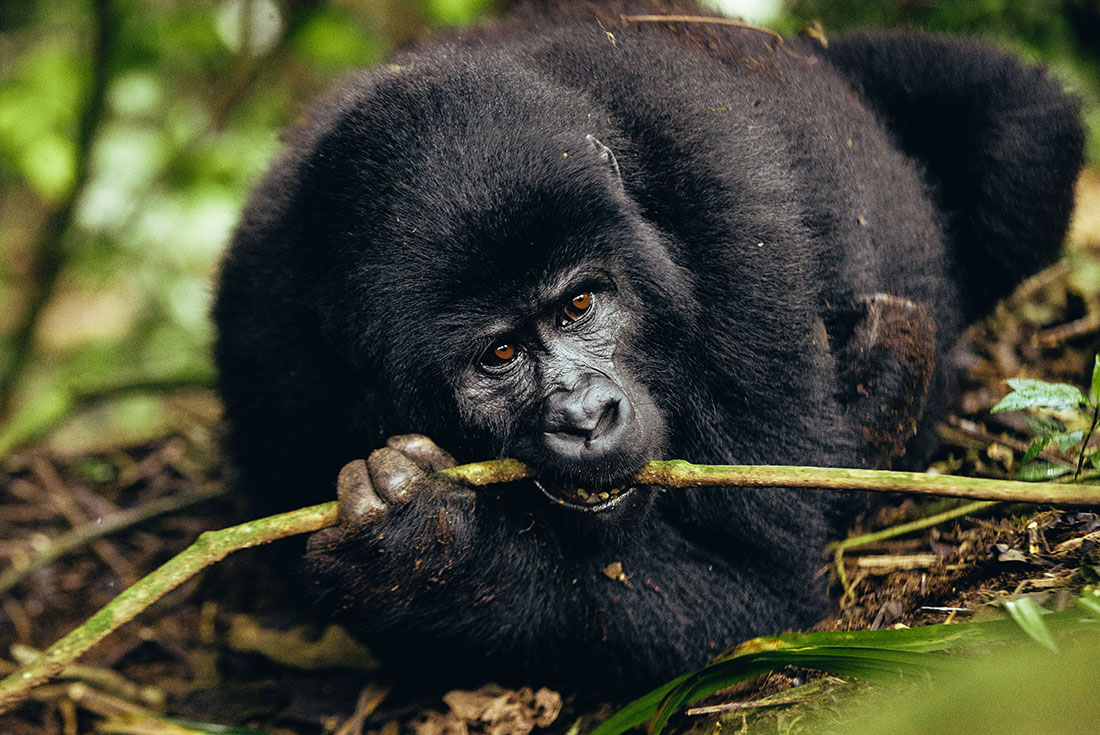
A mountain gorilla peacefully munching on a leaf in its natural habitat at Bwindi Impenetrable National Park - Valverde Safaris Uganda
What Makes Gorilla Trekking in Uganda So Special?
Unlike a game drive where animals may appear from a distance, gorilla trekking offers intimate and up-close encounters. Trekkers spend hours hiking through lush forests, guided by expert rangers who track gorilla movements. When you finally come face-to-face with a family of gorillas, the experience is breathtaking.
Watch a silverback — the dominant male — protectively guard his troop.
Observe mothers nursing babies while youngsters tumble and play.
Listen to the deep rumble of gorilla communication echoing through the forest.
This raw, unscripted encounter with our closest relatives in the animal kingdom is unlike any other safari experience. It’s an emotional moment that often leaves visitors in awe — and sometimes even in tears.
Where to Go: Bwindi & Mgahinga Gorilla National Parks
Uganda offers two primary destinations for gorilla trekking, each with its unique appeal.
Bwindi Impenetrable National Park
A UNESCO World Heritage Site, Bwindi is the most popular gorilla trekking destination in Uganda. With over 20 habituated gorilla families, the park offers a wide range of trekking routes. Its dense rainforest, dramatic ridges, and misty valleys provide the perfect backdrop for an unforgettable adventure.
Highlights: Largest gorilla population, multiple sectors (Buhoma, Ruhija, Rushaga, Nkuringo), and diverse wildlife including forest elephants and colorful birds.
Mgahinga Gorilla National Park
Nestled in the Virunga Mountains, Mgahinga is smaller but equally enchanting. Trekkers here enjoy volcanic landscapes, golden monkey tracking, and fewer crowds compared to Bwindi.
Highlights: Stunning volcano scenery, cultural encounters with the Batwa pygmies, and the chance to combine gorilla trekking with other primate adventures.
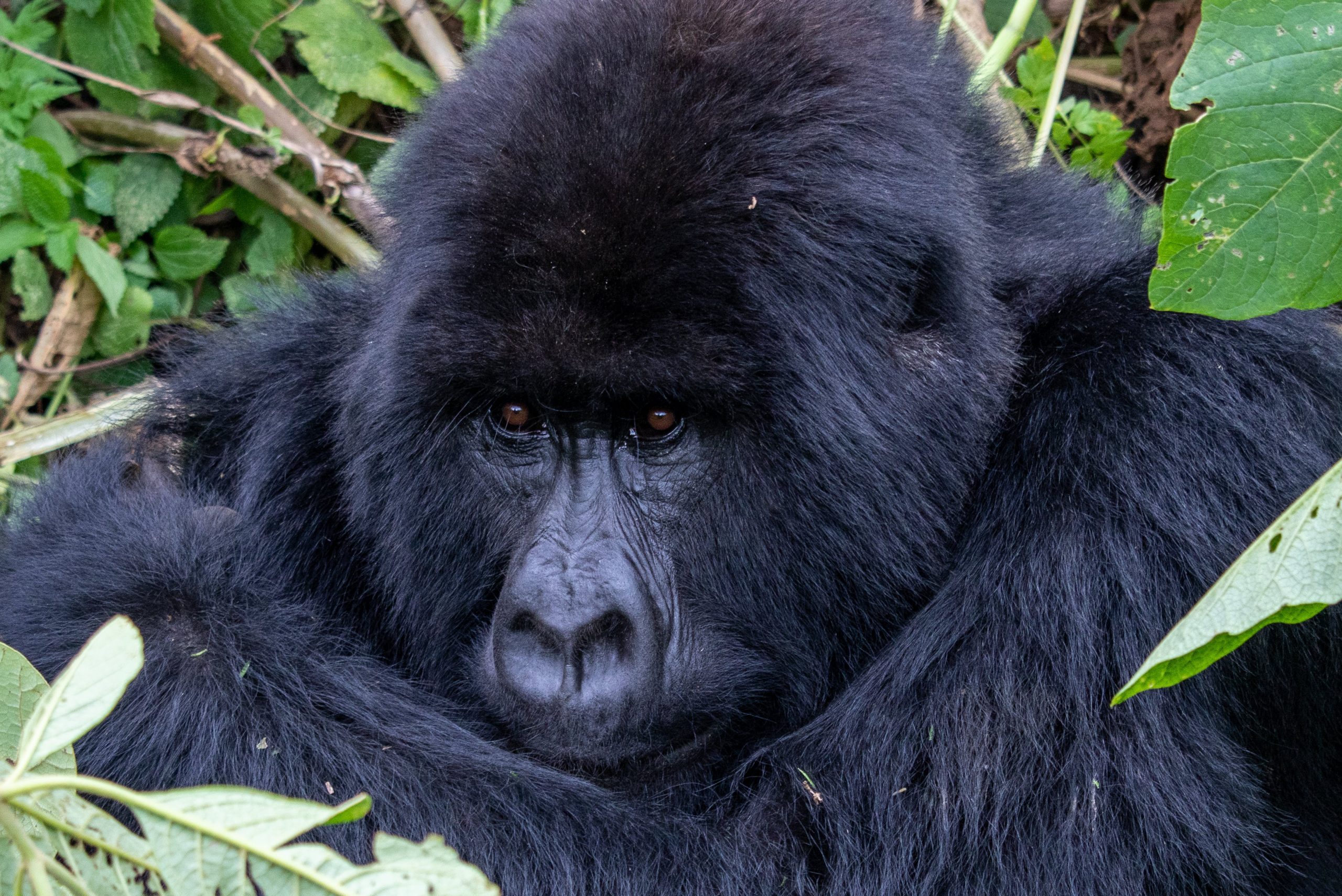
A mountain gorilla amidst the lush forest of Mgahinga Gorilla National Park – Valverde Safaris Uganda
A Gorilla resting in Bwindi Impenetrable Forest
A mountain gorilla peacefully munching on a leaf in its natural habitat at Bwindi Impenetrable National Park – Valverde Safaris Uganda
Gorilla Trekking Permits and Costs in Uganda
To regulate tourism and protect gorillas, a permit is required for each trek.
Cost: USD 800 per person (2025)
What it includes: Park entry, guides, trackers, and one magical hour with gorillas
Where to buy: Uganda Wildlife Authority (UWA) or authorized tour operators
Permits are limited and sell out months in advance, especially in high season. Booking early is essential to secure your spot.
Pro Tip: Some travelers combine gorilla trekking Uganda with safari extensions such as Queen Elizabeth National Park, Murchison Falls, or chimpanzee trekking in Kibale Forest.
Best Time of Year for Gorilla Trekking in Uganda
Uganda’s equatorial climate makes gorilla trekking possible year-round. However, the dry seasons are considered the best times:
June to September – Peak season with pleasant trekking conditions
December to February – Shorter dry season with fewer crowds
Rainy seasons (March–May, October–November) can make trails muddy and slippery, but the forest is incredibly lush, and fewer tourists mean a more private experience.
Preparing for Gorilla Trekking: What to Expect
A gorilla trek is an adventure — sometimes lasting 2–6 hours, depending on the gorilla family’s location. Here’s what to keep in mind:
Fitness: Moderate physical fitness is recommended, as treks involve hiking uphill through dense vegetation.
Gear: Good hiking boots, rain jacket, gloves, long trousers, and a walking stick are essential.
Rules: Visitors must maintain a 7-meter distance, avoid flash photography, and follow ranger instructions to ensure both safety and conservation.
For many, the anticipation of the trek is part of the excitement. Every step through Uganda’s lush forests brings you closer to an extraordinary encounter.
Conservation and Community Benefits
Gorilla trekking is more than tourism — it’s a vital tool for conservation and community development.
Conservation impact: Revenue from permits funds ranger patrols, habitat protection, and anti-poaching efforts.
Community support: A portion of permit fees is invested in local villages, supporting schools, health centers, and infrastructure.
Sustainable tourism: By choosing gorilla trekking Uganda, travelers contribute directly to the survival of endangered mountain gorillas.
This symbiotic relationship ensures that gorillas thrive, communities benefit, and visitors enjoy an authentic experience.
A mountain gorilla munching on a stick at Bwindi Impenetrable National Park
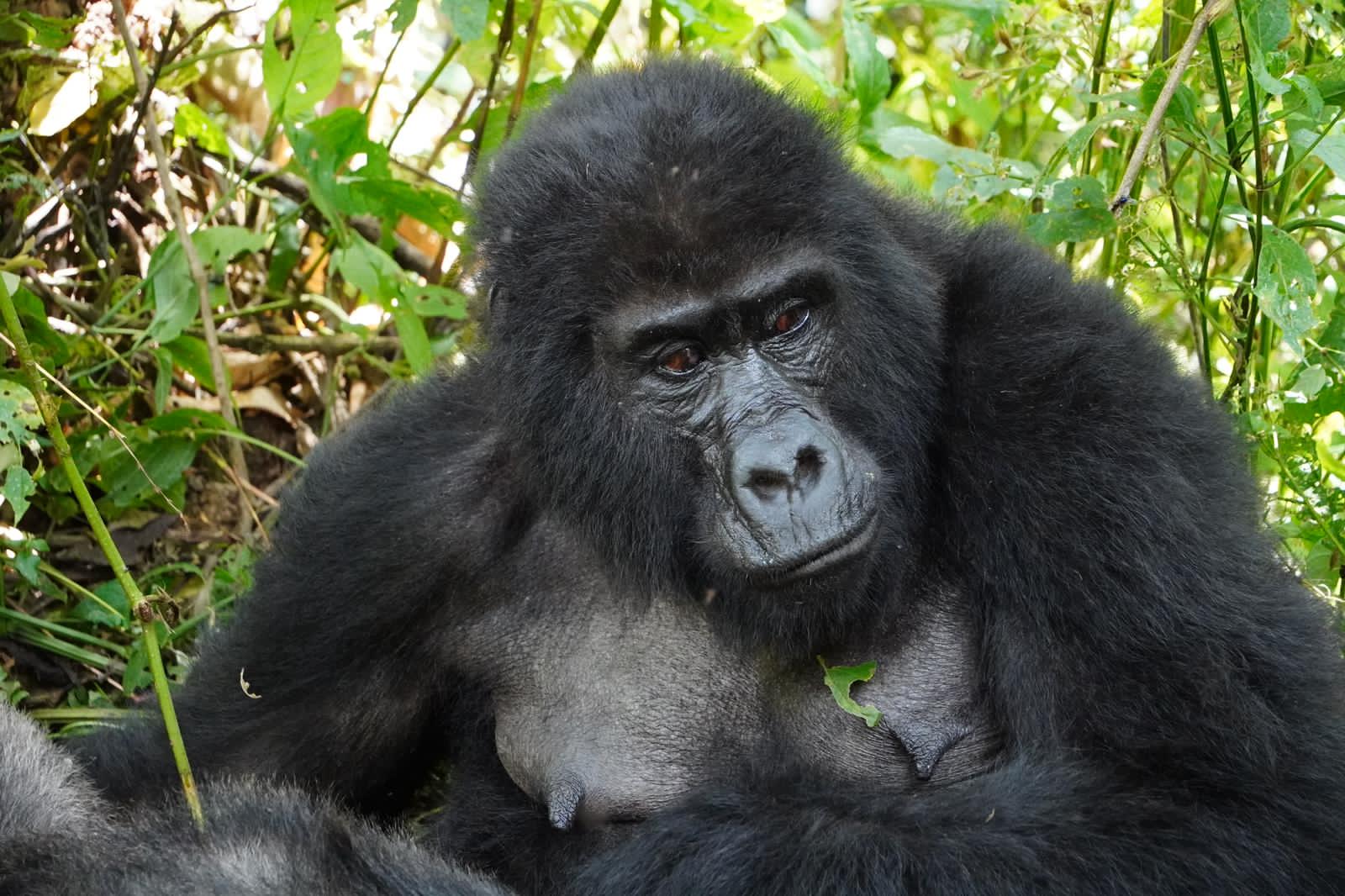
A gorilla sits in a forest at Bwindi Impenetrable Forest National Park – Valverde Safaris Uganda
Uganda vs Rwanda Gorilla Trekking — Which to Choose?
Both Uganda and Rwanda offer incredible gorilla trekking, but Uganda stands out for several reasons:
More gorilla families available for trekking
Lower permit cost compared to Rwanda ($800 vs Rwanda’s $1,500)
Diverse safari options beyond gorillas — Big Five safaris, chimpanzee tracking, boat cruises, and cultural tours
Scenic variety — from misty mountains to rolling savannahs
For travelers seeking value, diversity, and adventure, Uganda is often the preferred choice.
Other Activities to Combine with Gorilla Trekking
Gorilla trekking is the highlight, but Uganda offers so much more:
Game drives in Queen Elizabeth or Murchison Falls National Parks
Nile boat safaris with hippos, crocodiles, and birdlife
Cultural tours — meet the Batwa community or experience Ugandan traditions
Adventure activities — white-water rafting on the Nile or hiking the Rwenzori Mountains
By combining these, travelers enjoy a complete Uganda safari experience.
Traveler Testimonials: Voices from the Forest
Many who complete gorilla trekking describe it as the highlight of their lives:
“The moment I saw the silverback staring at me, I felt both humbled and exhilarated. It’s a memory I’ll treasure forever.”
“The trek was challenging but so worth it. Watching the baby gorillas play was like witnessing pure joy.”
Such testimonials emphasize why gorilla trekking remains Uganda’s most popular activity — it creates memories that stay with travelers long after they leave.
Final Thoughts on Gorilla Trekking in Uganda
Few experiences compare to standing in the presence of mountain gorillas in the wild. Beyond the thrill, gorilla trekking Uganda represents a rare chance to support conservation, empower communities, and immerse yourself in the natural wonders of East Africa.
If you’re planning a safari, make sure gorilla trekking in Bwindi or Mgahinga is at the top of your list. It’s more than an activity — it’s a journey into the heart of the wild, one that transforms both travelers and the future of these incredible animals.